 
Phone/Fax: Aust - 02 6643 5260. International - 61 2 6643 5260
or you can Email us at: scaleautomobilia@hotkey.net.au
ABN 19 806 466 796.
Tips, Tips and
more Tips
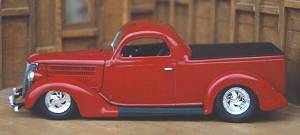 With a little patience and practice you could be
building models such as this 1936 Ford Phantom 3 window Ute by Jeff Cooper using a Jaymar
resin body and finished in maroon. (The real "Aussie" ute actually had a 5
window body). We have included some tips below to help you on your way to better model
building. Check out some of the sites on our links page to see
more tips from manufacturers and other model builders or take a look at some of the many models Andy has made during his 36 years of modelling
experience. With a little patience and practice you could be
building models such as this 1936 Ford Phantom 3 window Ute by Jeff Cooper using a Jaymar
resin body and finished in maroon. (The real "Aussie" ute actually had a 5
window body). We have included some tips below to help you on your way to better model
building. Check out some of the sites on our links page to see
more tips from manufacturers and other model builders or take a look at some of the many models Andy has made during his 36 years of modelling
experience.
Always square
off any part joins with a file or similar - a cheap and easy to use file are those emery
boards used to manicure fingernails, obtained at your local pharmacy or dept store, you
can usually get packs of 10-20 for less than $2.00.
Want an easy to
use model car/truck body holder? Get hold of an old wire coat hanger, hold it with the
hook up then fold both corners together. The piece of horizontal wire that you bent should
be squared off to fit inside the model body shell and the end with the hook on it
turned 90 degrees so that the finished hanger will sit on a table or bench- adjust the
bend inside the model body to provide enough tension to hold it secure but not enough to
push the model body out of shape.
When you use
small cans or bottles of paint to brush details on your model make sure you STIR the paint
well using a metal nail (a piece of model sprue or tree can be used but be careful you
don't cut small slivers of paint off on the inside edge of the paint tin) - then place
some mixed paint on the upturned tin lid and take paint from here - because the
paint from here is only a mm thick there is less chance of the paint pigment settling back
down in the can and changing colour.
Losing Parts? A
good idea is to get some zip lock bags/lunch bags to put trees/sprues in as soon as you
open the box- coin bags from the bank also work well, also place easily damaged parts like
windows, decals, ete in bags to protect them.
Rather than
waste the great candy/flake/pearl pressure pack you just bought, trying to get the hang of
how to use a spray pak properly, get some cheap dept store spray pack and practice using
it on an old model or toy before painting that new kit. Oh and always place a pressure
pack in WARM water for a few minutes (if its too hot to put your elbow in its too hot for
the pressure pack!!) - also remember to dry any water off the paint can thoroughly.
A good rule of
thumb when mixing paint for an airbrush is to have it the consistency of milk and remember
that you should use at least twice the volume of thinners or whatever in cleaning an
airbrush after use as you used in painting - an airbrush is clean when clean thinners is
put in the jar and when sprayed comes out clean.
A good way to
remove marks from windows and canopies is to use 600 grit then 1200 grit wet & dry
paper (with lots of water!!), then use a plastic polish like Bare Metal Plastic Polish to
remove the fine scratches. Ordinary toothpaste (not the gel type) can be used as
well as silver or brass polish but make sure you use it on a damp cloth.
The best way to
replicate red or blue anodizing like that found on AN fittings used on race cars is
to use transparent red/blue paints tho' not all shops carry them -an alternative is to
check your red/blue metallic paints- most have a colour medium with the heavier silver
based pigment at the bottom of the bottle or can - just open the can or bottle and DON'T
mix the paint - use the colour medium floating on top without touching the pigment
underneath - you'll be surprised how close it looks - this can also be used when you get a
kit that doesn't have red plastic tailight lenses or the lenses are chrome plated.
When building
aircraft with tricycle landing gear it is sometimes hard to find sufficient space in the
nose of the model to place enough weight to keep the tail off the ground - obviously the
more weight in the nose of the plane the better but other places such as engine nacelles,
propeller spinners (if fitted), inside fuel drop tanks and bombs (if in front of the main
or wing landing gear), inside gun turrets, inside radar domes, in fact anywhere you can
find will do. Your local fishing tackle shop has a great range of small lead sinkers, some
only a few mm in size - just remember if using sinkers that they are made of lead and try
not to handle them any more than necessary and wash your hands after!
Home Page |